How far can AI go on a software task?
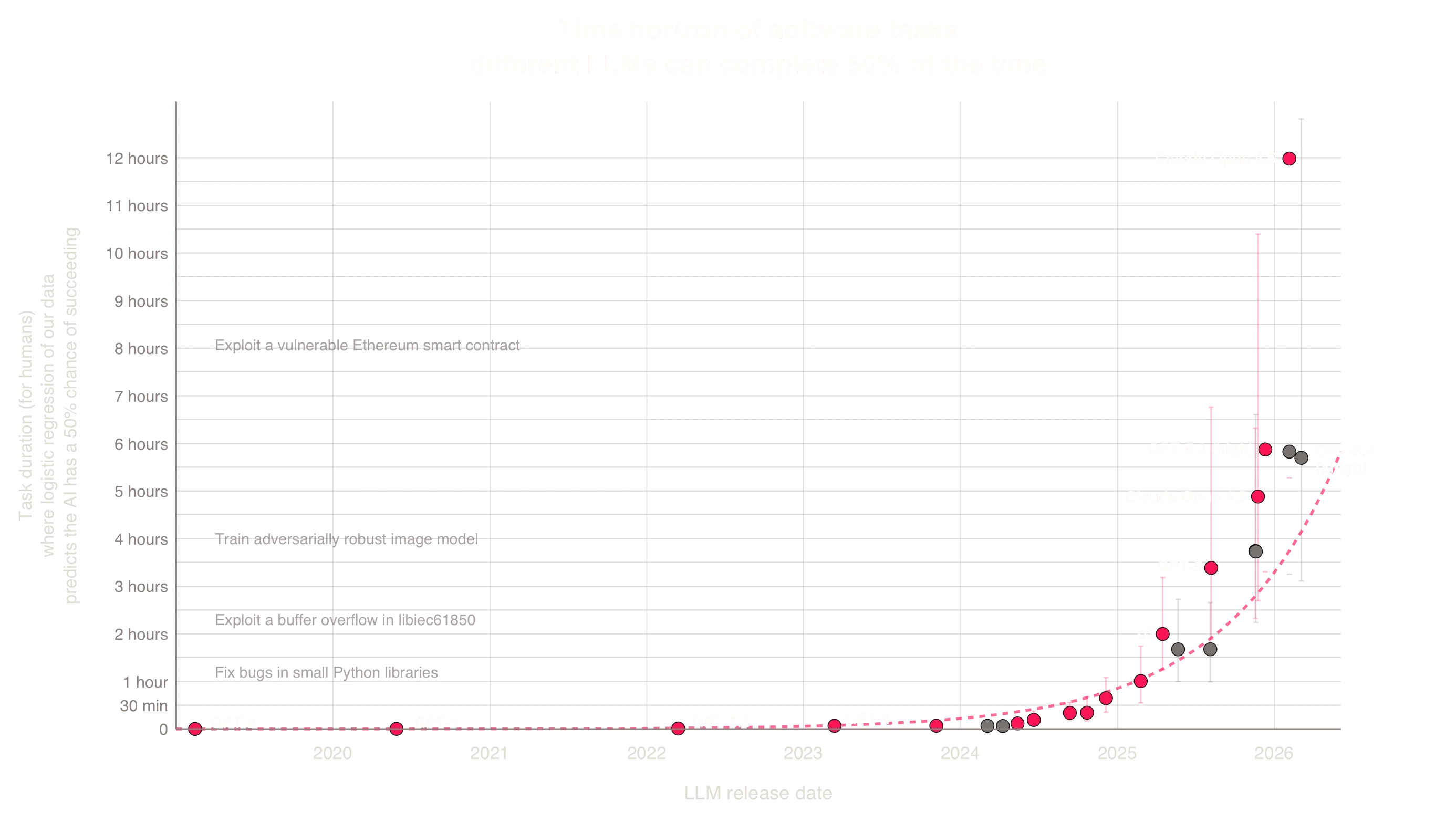
METR measures the duration of real software engineering tasks that AI models can reliably complete.
A community exploring the frontier of AI software engineering in Northern Ireland.
AI systems have become very capable of developing software, mostly by working with a human in a pair programming way.
However, people have started to run more ambitious experiments. Initially, the focus was on automatically implementing software at the ticket level. More recently, people have started pushing toward fully automating the creation of software end to end, from an initial idea to a working commercial product.
If this becomes effective, it could have a very disruptive effect on the software development industry.
There is a great opportunity to master this technology before it becomes widespread, as it may become the foundation of the whole industry.
In the early days of personal computing, the Homebrew Computer Club gave people a place to learn, experiment, and get ahead of a major technological shift. We want to build something similar in Northern Ireland, so that developers, researchers, and businesses here can understand fully automated software engineering early, build practical skills, and help shape where this goes.
METR measures the duration of real software engineering tasks that AI models can reliably complete.
OpenAI shipped an internal product where every line of code (application logic, tests, CI, documentation) was written by their Codex agent. Zero lines written by hand.
Anthropic had 16 parallel Claude instances build a C compiler from scratch. Over two weeks, the agents produced 100,000 lines of code capable of compiling the Linux kernel.
Stripe's coding agents, called "Minions," produce over a thousand merged pull requests every week.
Spotify's background coding agent has merged over 1,500 PRs for fleet-wide code maintenance.
Cursor's multi-agent system peaked at around 1,000 commits per hour building a web browser with almost no human input.
StrongDM's AI team operates by an explicit principle: "Code must not be written by humans. Code must not be reviewed by humans."
How far and how fast this goes is genuinely unclear. But it does seem like something people in Northern Ireland should be talking about now.
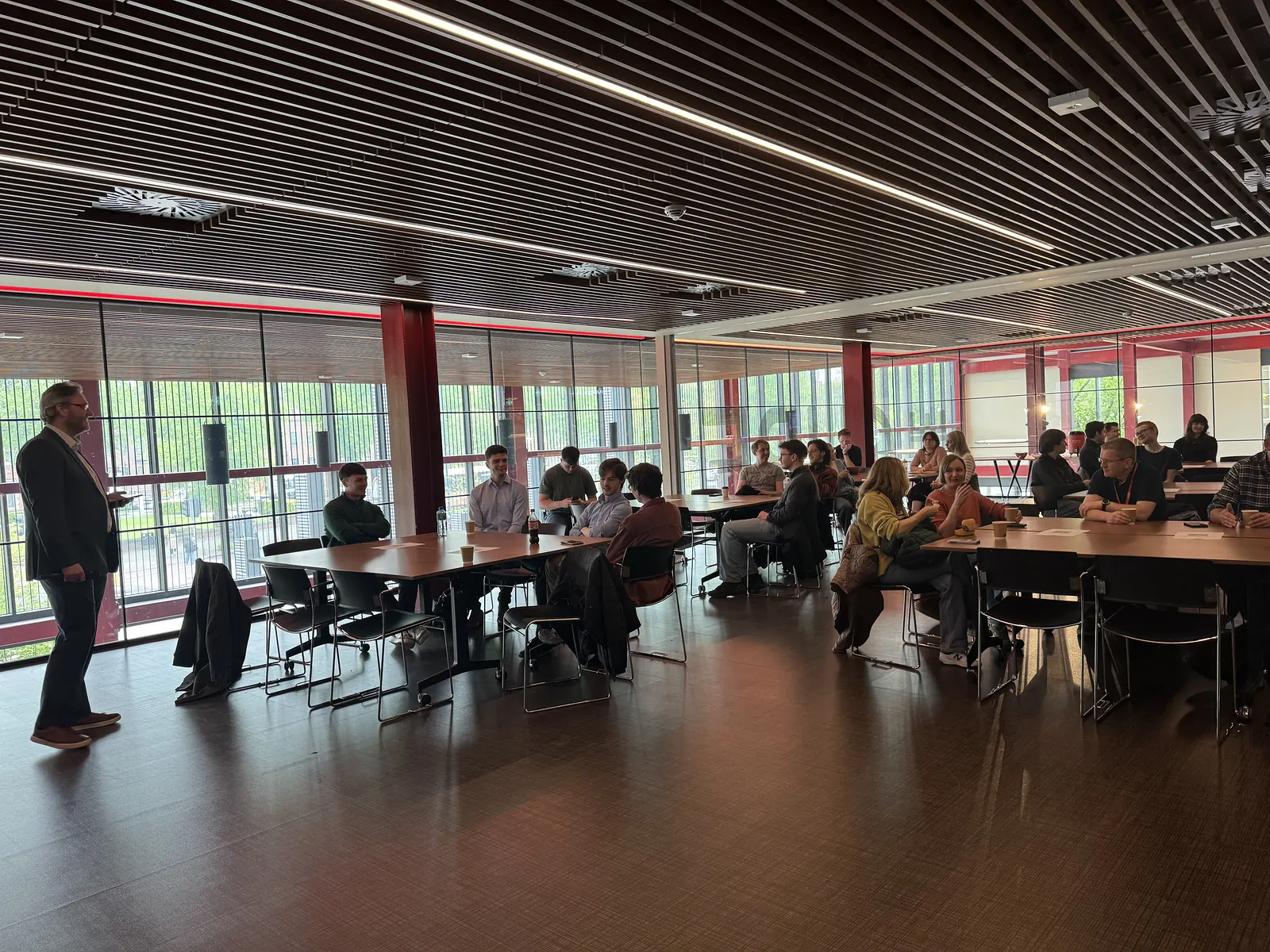
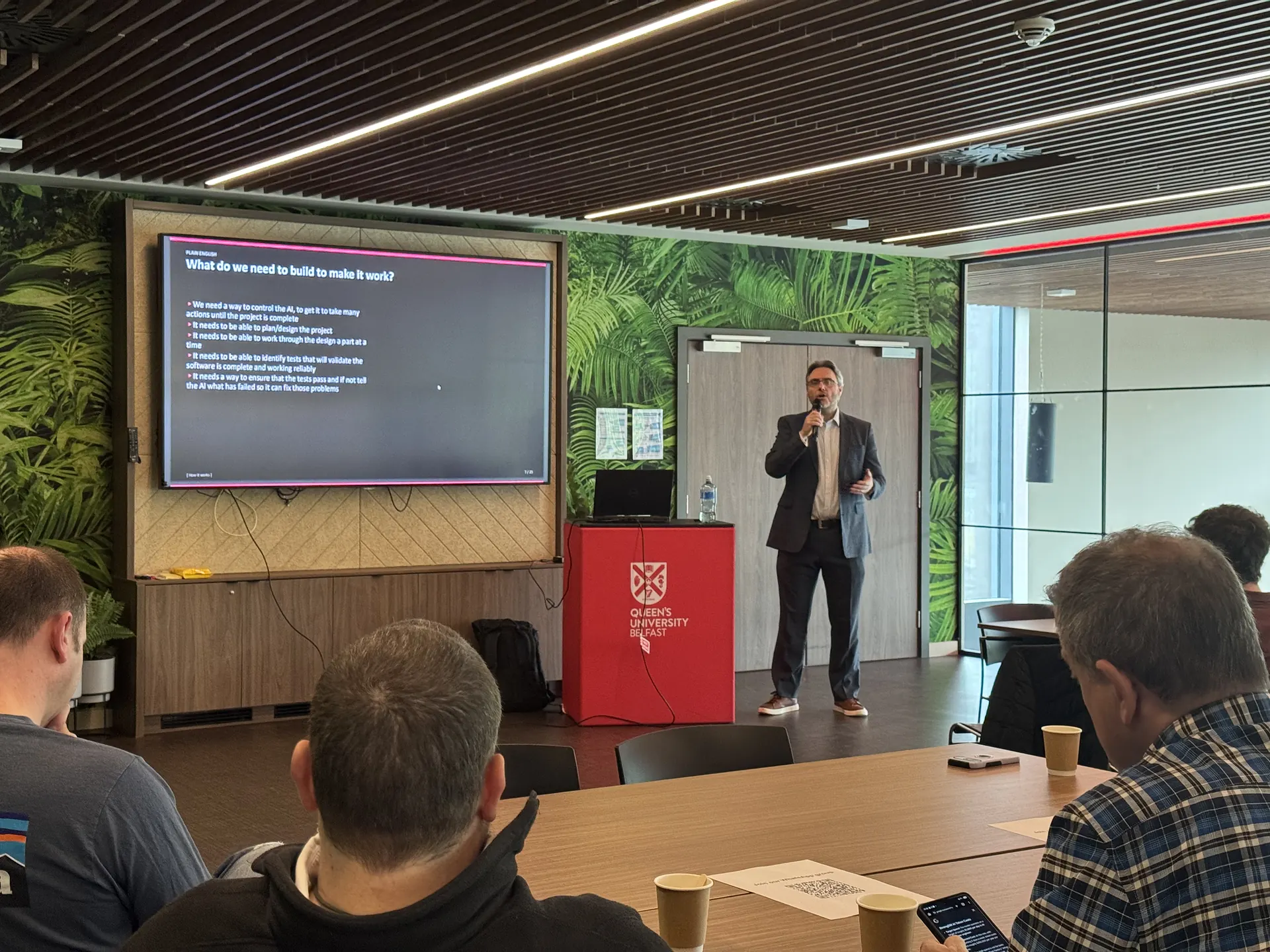
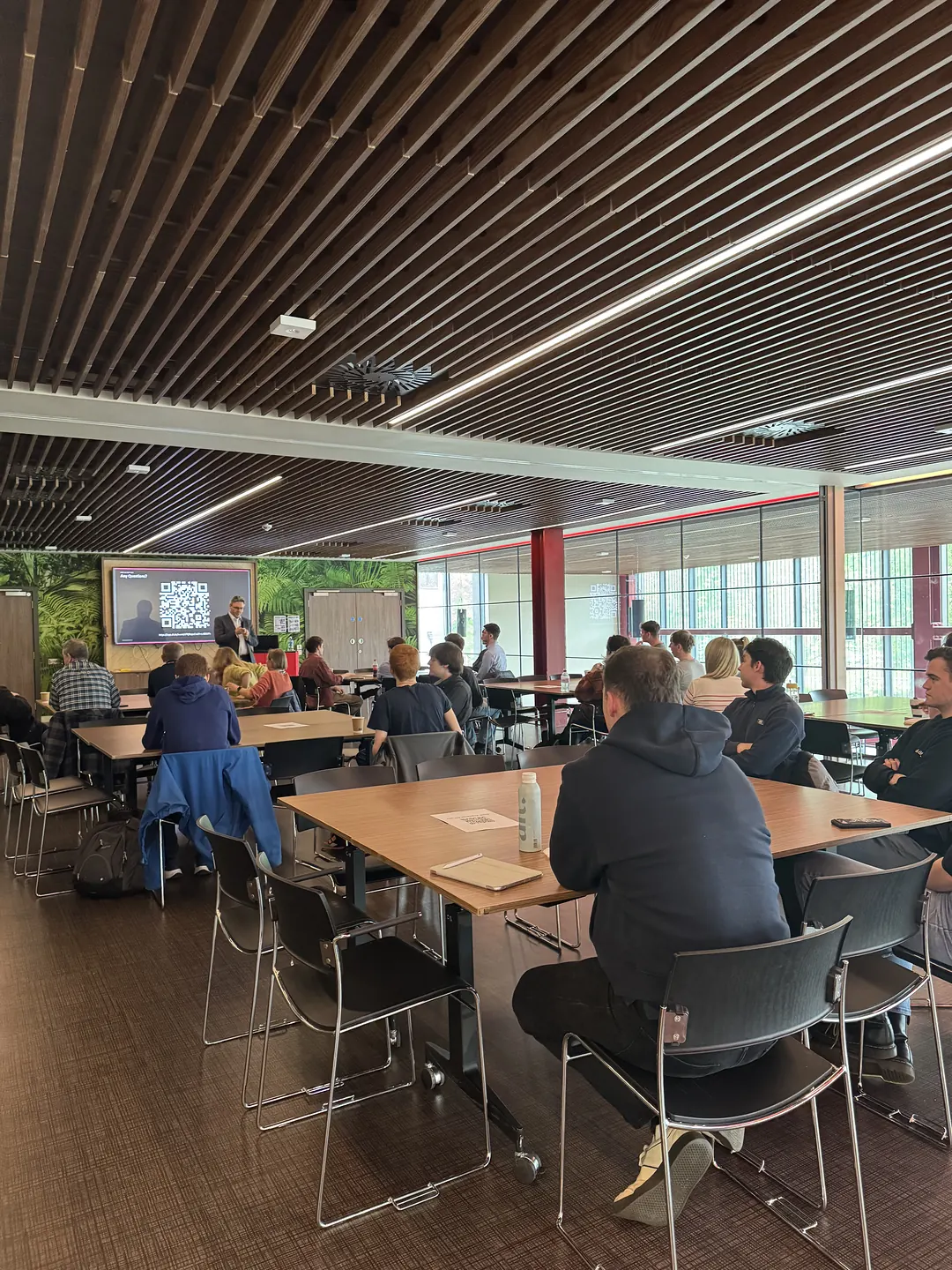
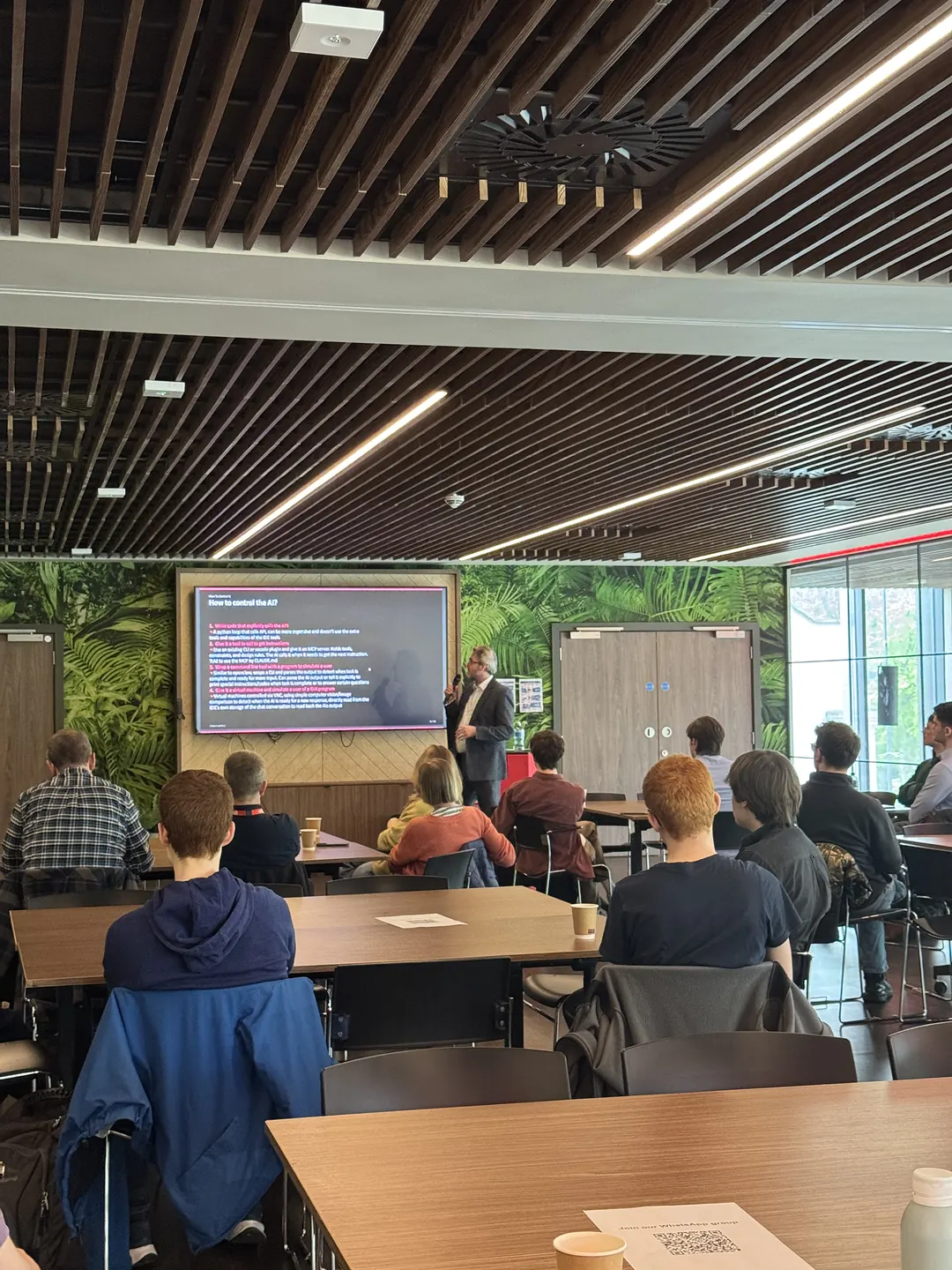
Our first session ran on Friday 8th May at The Cube, Queen's Students' Union. We had a great turnout - a mix of developers, business people, and students - and the conversation kept going after the talk wrapped up.
We walked through where fully automated software engineering is right now - what teams at OpenAI, Anthropic, Stripe, Spotify, and Cursor are actually doing - and talked about how to make this community a success.
Thanks to everyone who came along. We're planning to host these events Quarterly, with the next event in August - date and venue still to be confirmed. We'll post it in the WhatsApp group as soon as it's decided.
The open codebase we mentioned at the first event. It's a basic version of the type of system which we think is the future - one which can fully automatically create high quality software with no human programming required.
An open source codebase that demonstrates the type of system we're thinking about. From an English description of what you want, it produces a high quality working application - with tests, a database, and documentation - without a human writing a line of code.
It's just a start, and can certainly be improved. We're extremely open to any suggestions or thoughts.
We're working on the next session - date and venue to be announced. If you'd like to be the first to know, the easiest way is to join the WhatsApp group.
Open to developers, researchers, students, and people working in business. Free, as always.
WHEN August 2026 · Date TBA
WHERE Belfast · Venue TBA
COST Free · Open to all
These are some of the things being published by engineering teams building in this space. We find it useful to keep track of what's being said, and by whom.
We are a group of engineers and researchers trying to make sense of what's happening.